
The Theft of the Newman Jewels by Mark Rothwell & Andrea Tester
Using original police photographs we look at a theft from Exeter Cathedral in 1950.
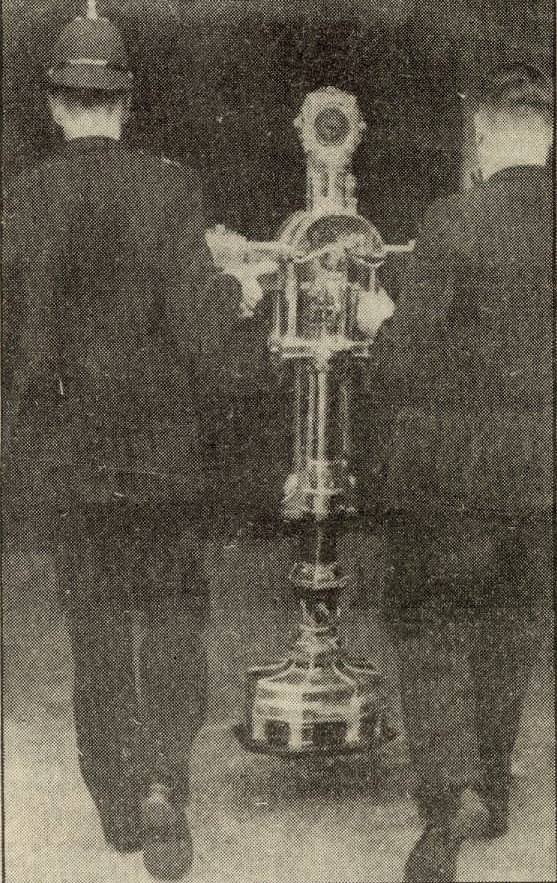
On the morning of 2nd July 1950, a junior verger at Exeter Cathedral opened the doors in readiness for Sunday Service. To his horror, the five and a half feet (1.52 Metres) tall silver high altar cross, studded with the Newman Family Jewels, was missing.
Mr Hart, the head verger, arrived a short time later and followed a trail of dusty footprints to the south side entrance, which had been forced open with a ‘jemmy’.
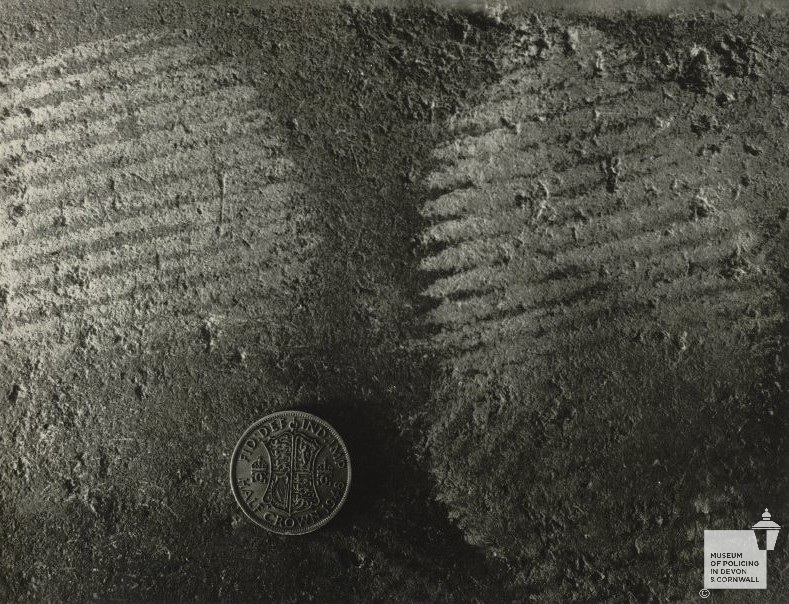
The footprints (Fig 1) suggested one person, with a distinctive barred pattern to the crepe soles of their shoes, had entered whilst an accomplice waited at the door.
Mr Hart immediately fetched Inspector Harry Arnold of Exeter City Police from the station at nearby Waterbeer Street, and an examination was conducted of the entire cathedral grounds.
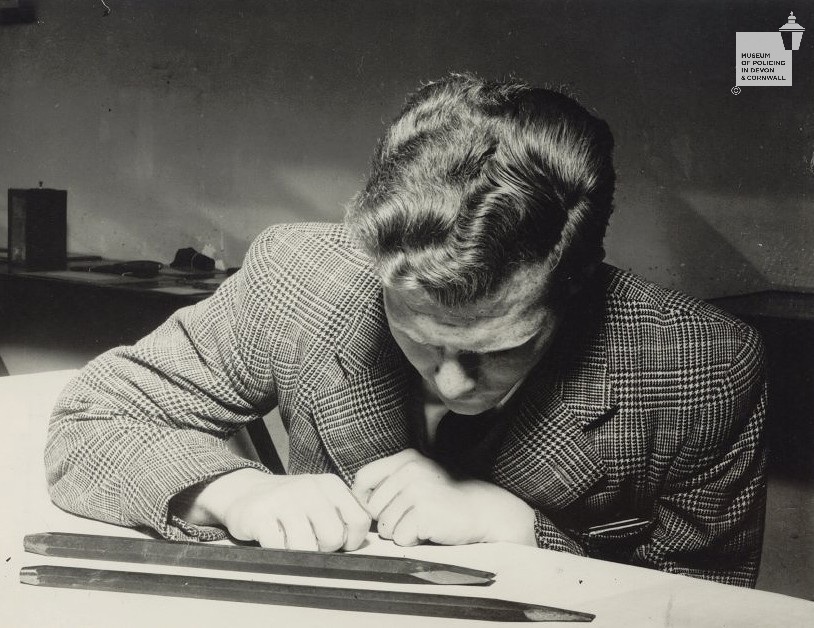
Two chisels (Fig 2), burred over by heavy hammer blows, were discovered nearby and the cutting edges matched perfectly with the tool marks of the ‘jemmies’ used on the south side door.
Building work was being carried out on the cathedral following the awful bomb damage suffered in Exeter during the Second World War. A temporary door had been erected with a single padlock, making it far easier to break and enter the crypt where the altar piece was kept.
Clearly the thieves had been observing the work on cathedral and planned their ‘visit’ carefully.
Farm worker Tom Wootton of Gittisham Farm, discovered the altar cross lying in a hedge some 12 miles away in a field at Fenny Bridges.
Devon Constabulary’s Honiton station relayed the details to Exeter City Police. Immediately Detective Inspector Bennett and Detective Sergeant Pessell motored to Fenny Bridges and with the assistance of Tom Wootton, the cross weighing 112lbs/50.8kg was recovered.
Although the cross was generally undamaged, there was one glaring detail – not one of the jewels were present.
On close examination it was discovered that the jewels were expertly removed, not a fingerprint was found despite the size and weight of the altar cross.
Later in the afternoon, a message was received from Wiltshire Constabulary headquarters to the effect that, a 1949 Bentley steel saloon (Fig 4) had been discovered abandoned near Salisbury.
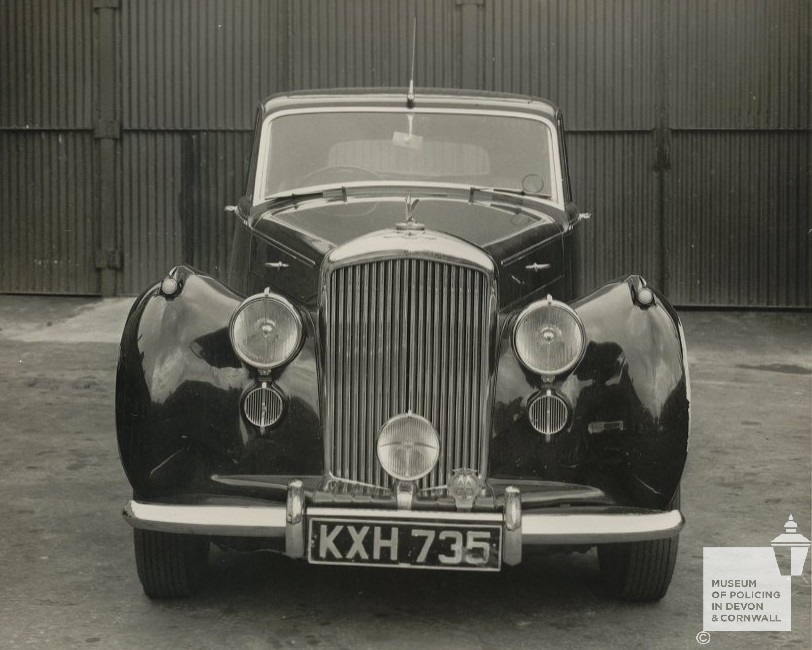
Scotland Yard were informed, records indicated the vehicle was reported stolen five months prior from a garage in Chiswick, London, and had racked up 7,000 miles since it was taken.
The Bentley had false number plates, unusual indentations in the vehicle’s upholstery, led the police to believe it had been used to transport something large and heavy.
Arrangements were made with the Director of the South West Forensic Science Laboratory, Bristol, for two of his assistants to visit Salisbury and examine the car.
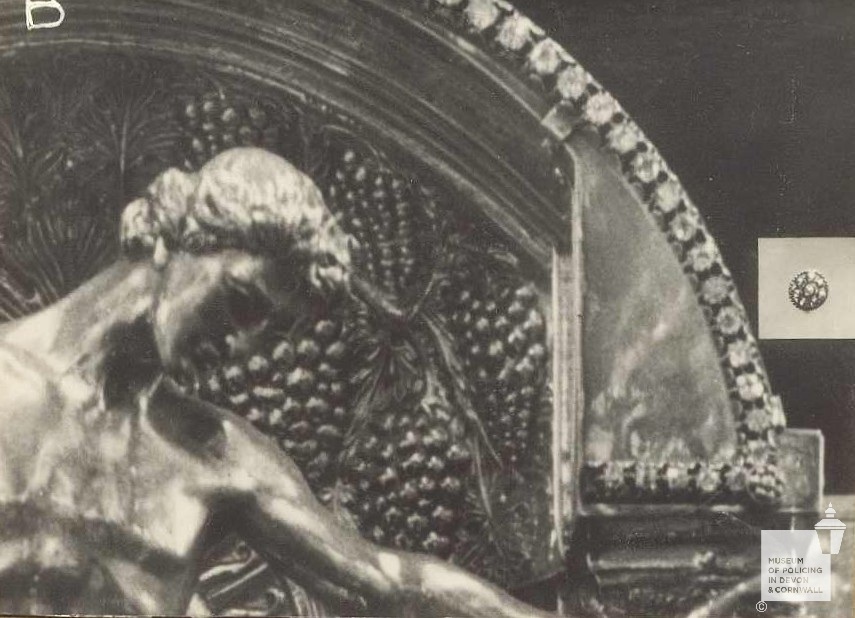
Following the examination, the damage to the vehicle’s interior was matched to various sharp and blunt edges on the high altar cross (see Figs 5 & 6).
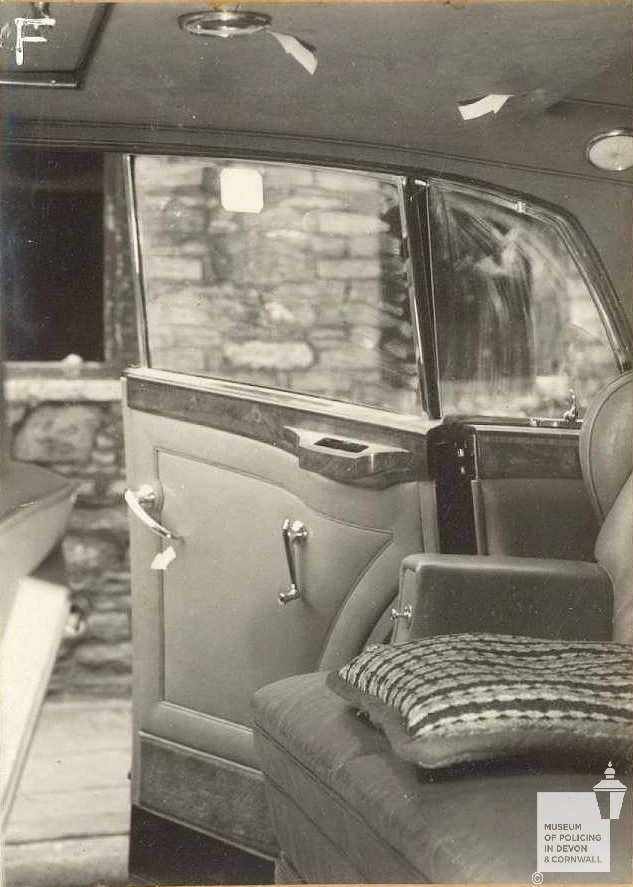
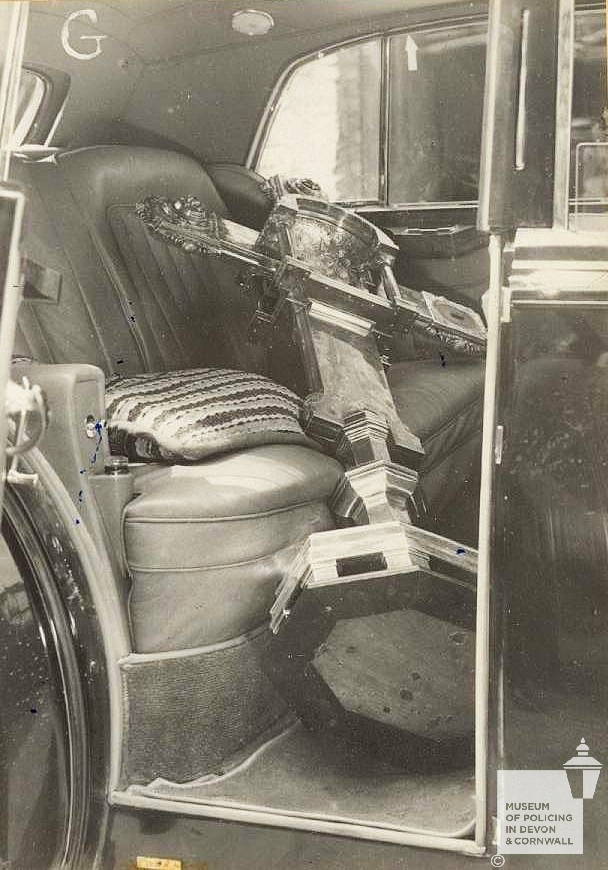
Fig 5: The inside of the car with damage from the altar indicated. Fig 6: The altar shown as it was when put into the car.
Despite a thorough investigation, excellent forensics work, and the offer of a £450 reward from the loss assessors, the thieves were never apprehended. After the two thieves had stripped the cross of its jewels, they probably shared out the ‘spoils’ in the field at Fenny Bridges and went their separate ways.
The jewels, three circular diamond brooches each situated at the three points of the cross, and a diamond tiara worth over £20,000 at that time, were never recovered.
The average weekly wage in the UK in 1950 was £5.60, that’s around 68 years wages to reach £20,000, and even more years lower earners. An average house price of £2,000 gives an idea of what a colossal sum that was at the time.
In today’s money we’re looking at close to £900,000!
Several people may be innocently wearing some of the stolen Newman jewels, completely unaware of their history. They, and we, will never know because the crime has never been solved.