
By Peter Hinchliffe with Andrea Tester
The Municipal Corporation Act of 1835 required the formation of a paid, uniformed police force overseen by the Mayor and Corporation.
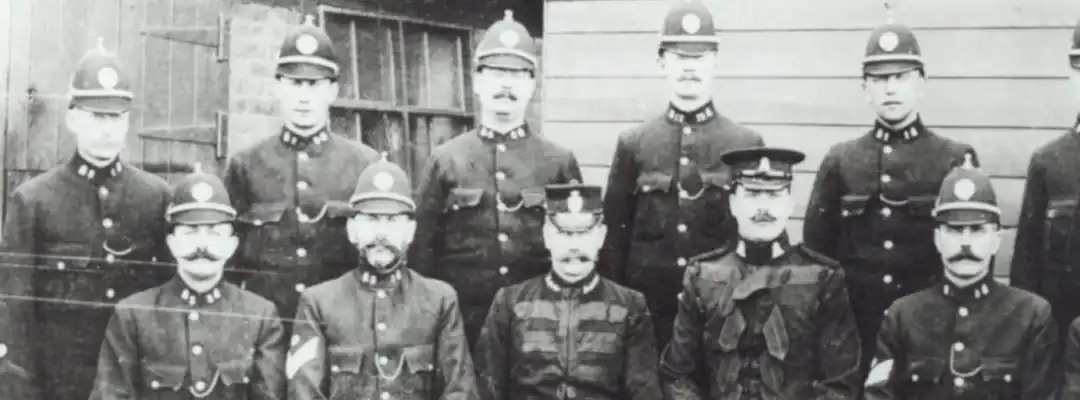
Exeter City Police was formed under this new Act in January 1836, headquarters was initially in what is now the Old Guildhall, which had been used for the city night police and day police for many years prior to the Act of 1835. The Museum of Policing in Devon & Cornwall holds the ledger in our archive which names all the members of the Exeter City Police from 1800 onwards. The Old Guildhall continued to be used as police headquarters from 1836 until the station at Waterbeer Street opened in 1888.
Sixty years ago, on 1st April 1966 Exeter City Police was amalgamated with the Devon Constabulary. This new force became the short-lived Devon & Exeter Police which was merged with Cornwall Constabulary and Plymouth City Police in June 1967. This became Devon & Cornwall Constabulary.
Here is one of the last cases dealt with by Exeter City Police in 1966, as remembered here by Peter Hinchliffe who was there at the time:
Carlyon Gardens
In February 1966 Selleck, Nicholl and Williams (SNW), a very large building company, were developing Carlyon Gardens in Sweetbriar Lane, Exeter. This was a unique scheme for Exeter City Council, where council house tenants could, for a down payment of £25 and a lifetime mortgage, purchase their own house on a pleasant development, that has stood the test of time.
The houses were the latest idea of ‘system construction’ and were delivered, part fabricated and then completed on site.
The company were concerned with a major deficiency in stock on the site. They employed a Security Advisor, a former Southampton detective inspector, and he became involved in an investigation of the losses.
The quantities of materials missing from the site were such, that he considered that they were never delivered. He thought that there must be collusion between the suppliers and other builders, and that the materials had been diverted elsewhere. He was pursuing that line of enquiry when he visited the site in Exeter.
Plumbing Problems
The Security Advisor was present when the plumbing packs for 20 houses were delivered, in fact, he signed the driver’s delivery note when he had satisfied himself that he had received the packs, containing 20 sets of pipes, cylinders, taps etc. The plumbing packs were stored in a compound, and the following day when the plumbers were ready to fit them, they found only 9 sets, 11 had disappeared from the compound overnight.
This was the first occasion that everyone knew for sure that the materials had actually been on site. The Security Advisor then started checking the quantities of other materials that were unaccounted for. He discovered that 11 packs of flooring were missing, 11 packs of plaster boards and accompanying plaster bags were unaccounted for. Bricks, blocks, roofing tiles, and ‘heavy side’ materials for approximately 11 houses were also short, and he came to the conclusion that someone had stolen the equivalent of 11 houses from the site!
The ‘Help Yourself’ Build
We at Exeter City Police commenced enquiries, and soon discovered that one man working on the Carlyon Gardens site was involved in a self-build project in Paignton. A group of men had started, in their spare time, constructing their own houses. It was discovered that they were building 11 houses and had the good fortune that one of their number could supply materials at a discounted rate.
There was a lack of sufficient evidence to prosecute the case effectively, although we did secure a conviction for the theft of the plumbing gear.
The builders, SNW did progress the matter through the civil courts, and reached a compromise.
I was quite surprised when, after I had retired from the police force, and was attending a security course at Loughborough University, to hear of the case ‘Theft of 11 Houses’. Accounts of it also appear in several of the textbooks available for training security personnel, usually under the general heading of…
‘The Bu….s’ll Steal Anything!’
For context of the time period:
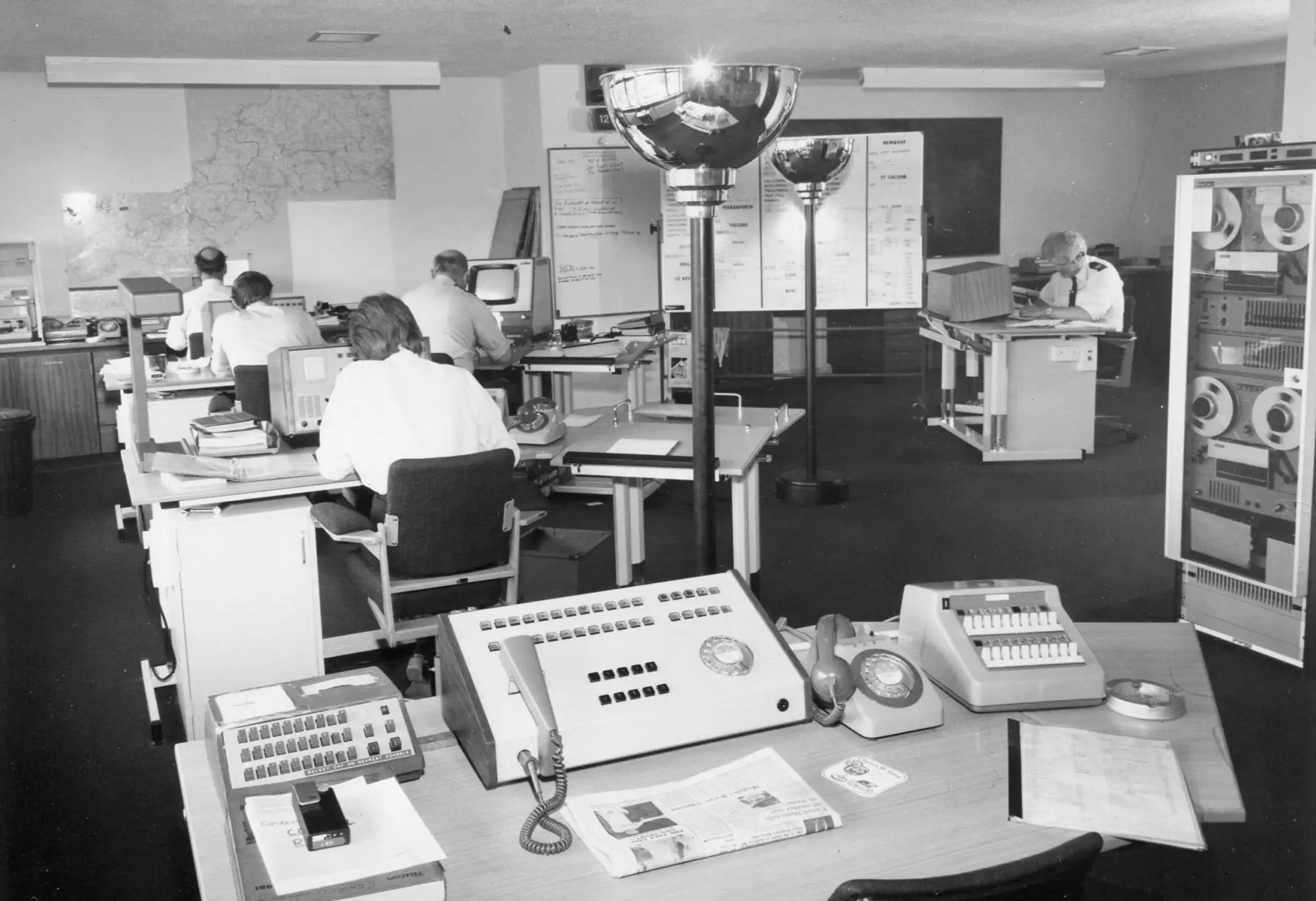
Security cameras (CCTV) had been invented, but still some way from general use in 1966; today they are everywhere.
Nobody was on the site overnight to witness the thefts from the compound.
Different times.
And finally with apologies:
The theft of plumbing equipment brought to mind the clever play on words by Ronnie Barker:
The toilets at a local police station have been stolen.
Police say they have nothing to go on.