
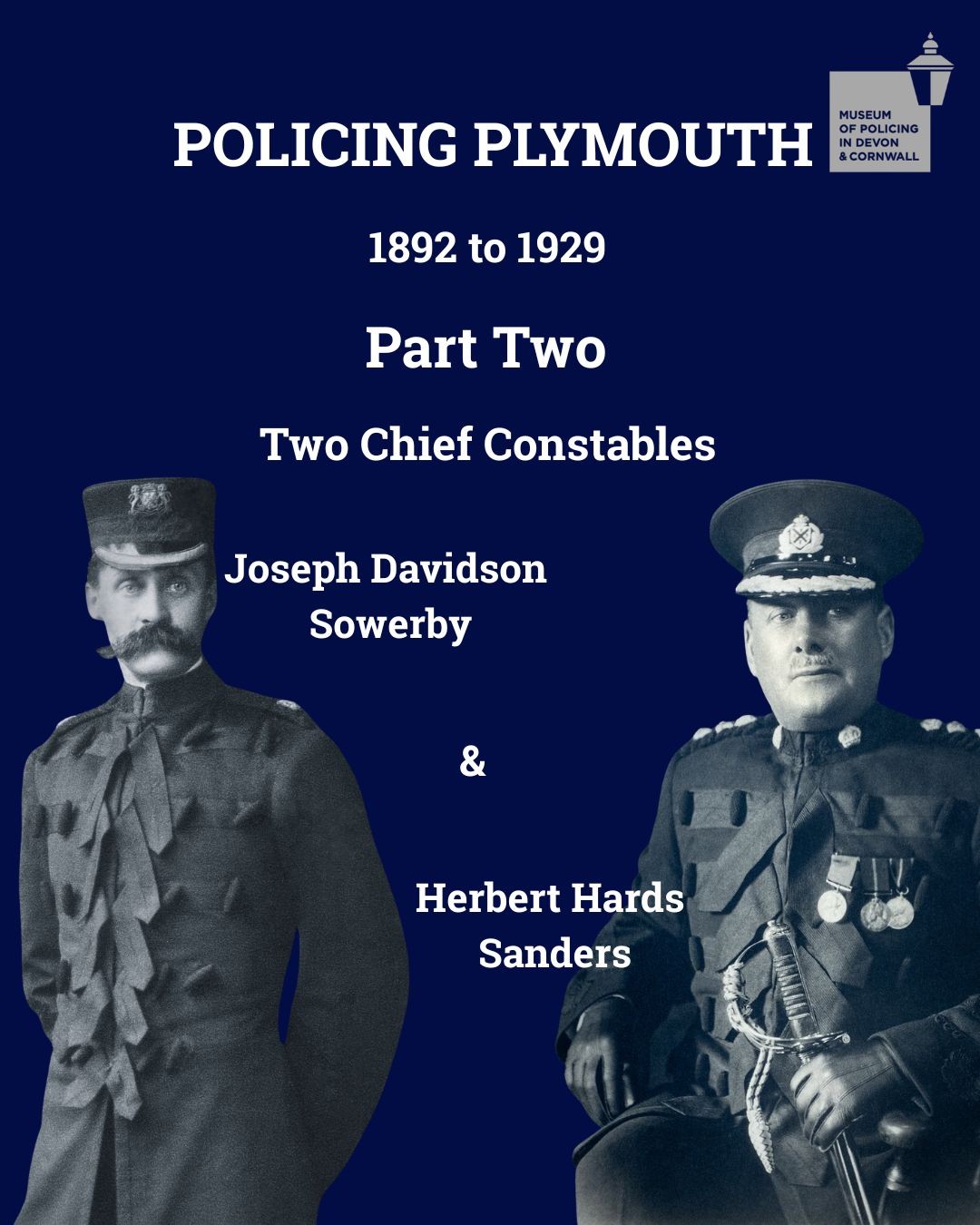
Back in May the Museum of Policing held an exhibition in Royal William Yard covering policing in Plymouth covering the tenure of two great Chief Constables over 37 years. An excerpt of the same exhibition was brought to Tavistock Guildhall Heritage Centre in July and this has now ended.
For those who wouldn’t have been able to see the exhibition at either venue, we give you a flavour of Policing Plymouth 1892 to 1929.
In this second part, we cover some of the tenure of Chief Constable Herbert Hards Sanders, 1917 to 1929.
The Man from Special Branch
Herbert Hards Sanders was born in Dover in 1873, the son Thomas Osborne Sanders and Eliza Ann Batcheler. Thomas was Chief Constable of Dover Borough Police.
Sanders joined the Metropolitan Police in 1894 and proved to be an excellent crime investigator. He rose quickly through the ranks and for several years was Divisional Chief Inspector of Special Branch.
During the Great War he investigated Bertha Trost, a woman suspected of passing Government secrets to the German Empire, ending in her deportation.
With the French authorities in Belgium he investigated Baron Moritz von Bissing, German Governor General of Brussels who ordered the execution of nurse Edith Cavell.
Sanders also investigated the Kaiser’s Court Pianist Natalia Janotha suspected of collaborating with a spy amongst Prime Minister Neville Chamberlain’s staff.
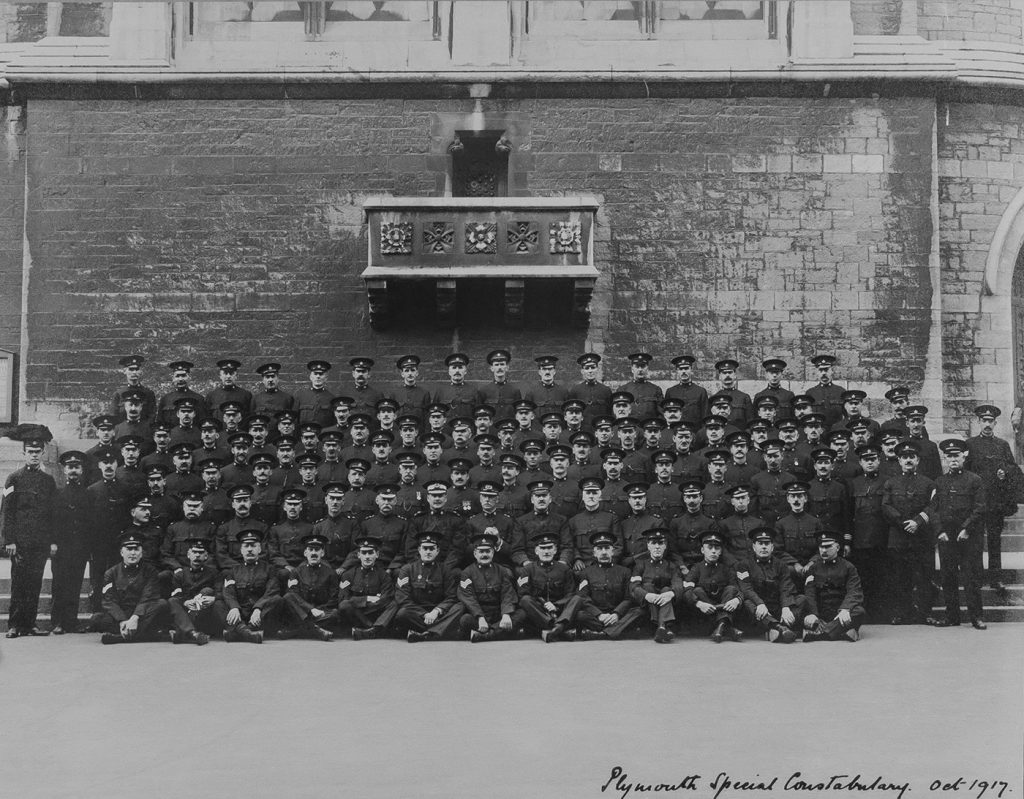
Sanders later led ‘F’ Division in the Criminal investigation Department before leaving to take up the Chief Constable position with Plymouth Borough Police on 1st April 1917 whilst the Great War raged on. He is in the photo below (Fig 1) seated in the second row from bottom; he’s with the Special Constabulary which did great work covering the duties of the men called up to fight. Chief Sanders has a pale band around his cap.
Women in Policing
In 1917 Chief Sanders granted twenty patrolwomen from the National Union of Women Workers (NUWWO) quasi-special constable status to ensure their work alongside the regular police force was recognised.
After the war the NUWWO Patrolwomen were disbanded but there were numerous letters to the Watch Committee requesting the continuation of their services, Sanders was a progressive thinker and laid the groundwork for the introduction of women into the police family.
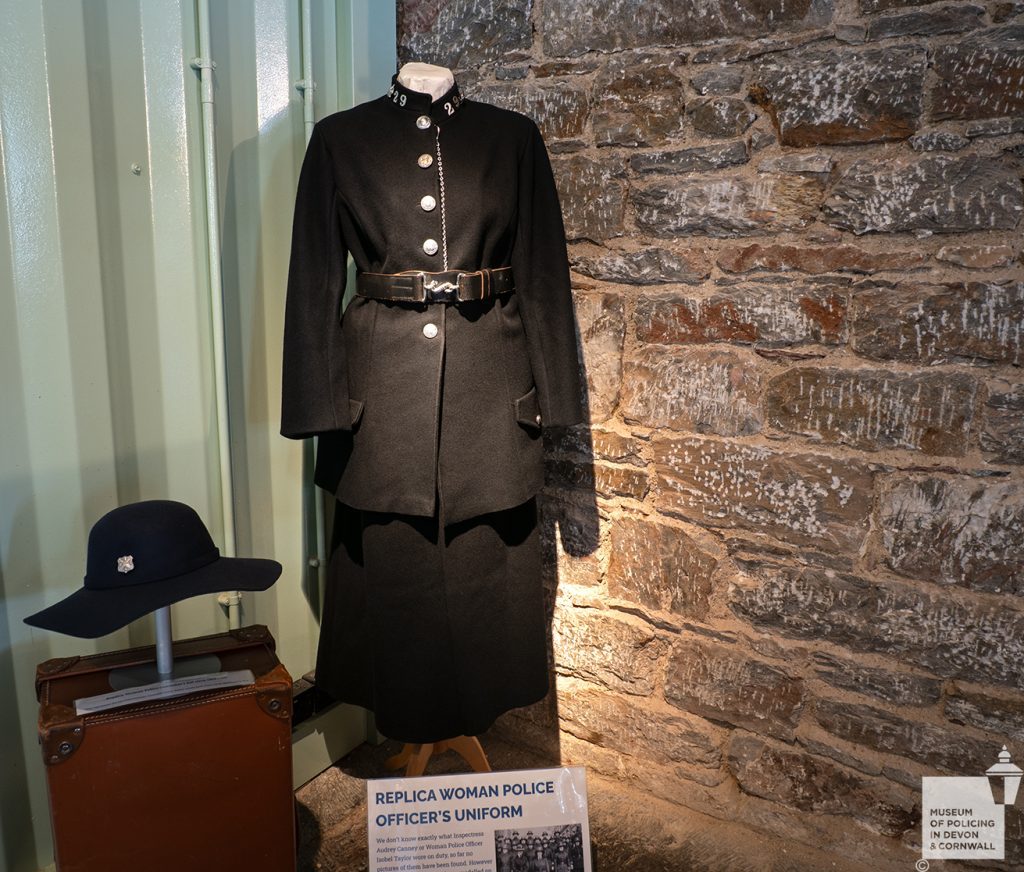
On the 21st of May 1919 the Watch Committee agreed to appoint 2 policewomen and chose for them quarters in part of the Plymouth Guildhall. Just a month later under Sander’s tenure, Inspectress Audrey Canney and Constable Isobel Taylor (See uniform interpretation in Fig 2) were in post. They were not sworn in due to the Secretary of State’s view that they should not attest women at that time. They were both awarded pay increases after 6 months for their good work. Sadly, it didn’t last; the Watch Committee decided to end their service as part of post-war money saving initiatives in 1921. Local groups and people such as Nancy, Lady Astor continued to campaign for them, but it took another 16 years to effect a change. However, female civilian staff continued throughout as Matrons.
Traffic Trouble
City traffic has always had congestion problems. Plymouth’s first ‘Points Policemen’ were introduced under Sowerby to avoid traffic collisions and jams and to try to protect pedestrians from the variety of vehicles in the town.
By 1920 there were still horse drawn vehicles using the roads but now they were increasingly joined by motor vehicles, causing frequent collisions and congestion.
In the summer of 1923 traffic levels were a matter for concern and Chief Constable Sanders introduced and oversaw the first traffic census and presented his findings to the Local Taxation Committee at the House of Commons. This was in connection with his application contained in the Corporation Bill empowering the police to enforce signals (traffic lights) regulating street traffic thus relieving his men from point duty and traffic control.
In August 1925 the Western Morning News reported that two years on from the traffic census traffic congestion had become worse. “In Plymouth traffic problem grows daily and anyone who watches the unending stream of traffic, particularly motor traffic, through the borough’s narrow and congested streets, cannot fail to feel apprehensive.
It’s generally recognised that the police are faced with a most unenviable task and the fact that the town’s casualty list is not far more severe, is due to the very capable manner which they handle the traffic under the most difficult circumstances (Fig 3).
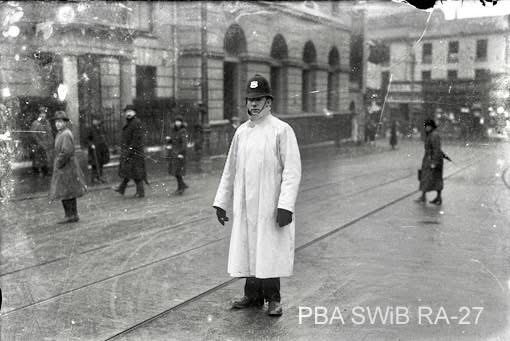
Fig 3: A Plymouth Borough Policeman on traffic duty during a quiet moment at Bank of England Place. With thanks to Cyberheritage.
An experimental ‘plimsoll line’ to organise traffic was trialled in Plymouth’s Bedford Street in 1925, this followed Birmingham’s own trial. This may have been reported back to Chief Sanders by Plymouth police officers who had been carrying out their initial training by arrangement with Birmingham City Police.
At the end of the 1920’s the numbers of motor vehicles on the roads as well as the speeds they could achieve had increased dramatically, and fatalities were far too high for Chief Constable Sanders, so he looked for ways to improve safety.
Sanders was involved in the development of the National ‘Safety First’ Campaign, in 1928. The delegation demanded the Government look at accident causes, knowledge of the rules of the road, provision of footpaths and dazzle, amongst other things. More than 10,000 children attended film lectures about avoiding accidents and wrote essays about safety. In Plymouth Chief Constable Sanders personally gave talks to the public and to schools on the subject and empowered his men to do the same.
In an interview with a Western Morning News reporter on 9th March 1929, he said:
“Be civil to the policeman, and he will be civil to you. Remember the policeman on point duty has a very difficult task. Don’t make it more arduous by asking him questions. Don’t pull up and leave your car on the wrong side of the road. It is always dangerous to pass a tramcar on the near side. There is great improvement in the driving of motorists compared to five years ago. Help it to improve still more.”
Improving Fire Safety
As Fire captain, Sanders continued to improve fire safety, in 1921, he oversaw the installation of a public fire alarm system which could be used to raise the emergency services. The system was then integrated with the town’s police call boxes in 1924 empowering everyone to be able to use the telephone to get help.
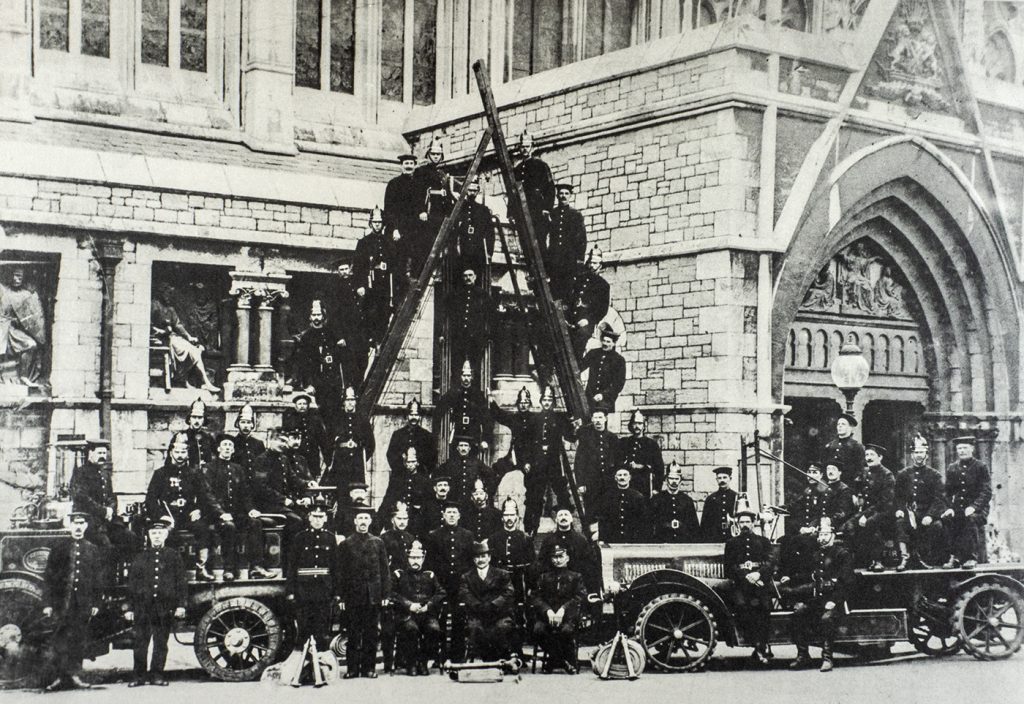
In the photo (Fig 4) you see Chief Sanders, seated in plain clothes in the centre, with two motorised fire appliances on either side. The engine to the left was an earlier pump from Chief Sowerby’s tenure and the right hand one was purchased in 1919, equipped with ladders and a turn-table. Sanders ensured that all members of his fire brigade had proper uniforms, training and up to date equipment. The man in the striped belt is Hedley Miller the founder of Plymouth Ambulance Service.
Poverty
Like his predecessor, Chief Constable Sanders recognised that poverty and crime were linked, he and his wife worked hard to relieve those suffering through philanthropy as well as policing. Difficulties with unemployment and strikes created real difficulties from 1926 onwards. Sanders requisitioned a warehouse near the docks at Devonport in 1928 where he and his officers encouraged the poorest to go to for their clothes to cleaned and repaired. This was done by Mrs Bertha Sanders and her friends. The poverty levels had left some children without shoes, so they collected footwear and clothes for them.
There was a scheme set up for the Plymouth policemen to donate some of their pay to raise money for these good causes, and they actively sought out people on their beat in need of help (Fig 5). Chief Sanders organised films to be made illustrating the work being done to help the poorest in society. Follow the link above and at the end of this article to our Youtube exhibition video, which includes the 1926 silent film about a family in poverty courtesy of Cyberheritage, which we have been showing during the exhibitions.
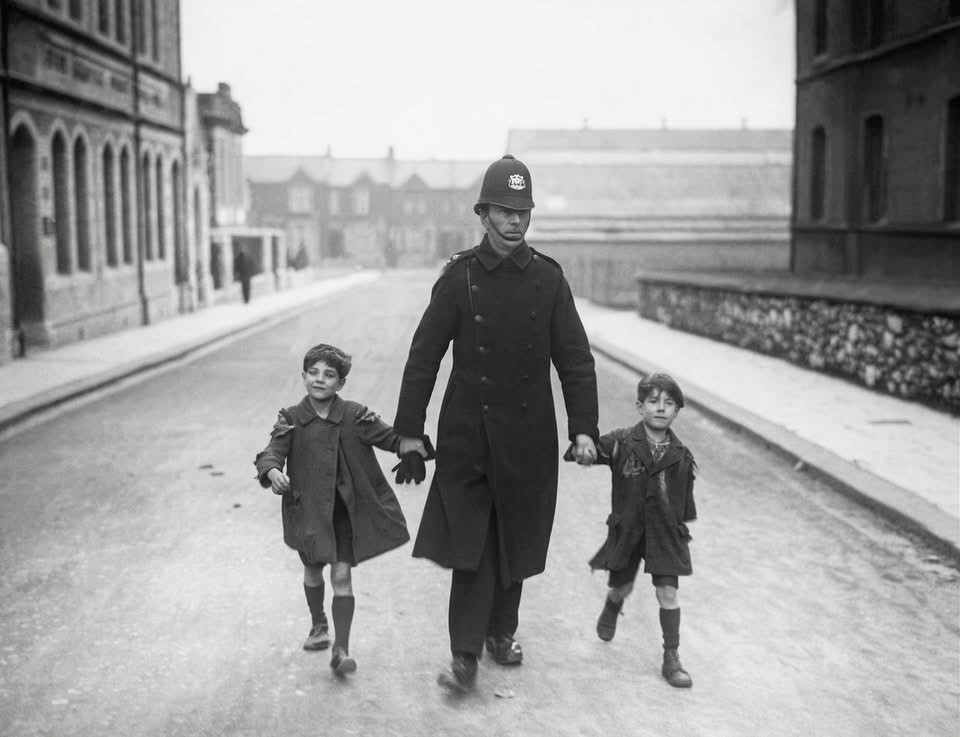
Fig 5: Policeman with two children. With thanks to Plymouth History. This is a ‘still’ from a film commissioned by Chief Sanders about the poorest children being helped by the police along with Bertha Sanders and friends. This film is held by the BFI, and individuals can watch on free replay, simply follow this link.
A Friend of the Poor
September 30th 1929 saw Chief Constable Sanders retire following 33 years of police service, 12 served in what was now the City of Plymouth (which became a city in 1928). The local press called him ‘A Friend of the Poor’ adding that he and his wife would be sorely missed.
His wife Bertha was suffering ill health which was the reason for retiring and they moved to East Sussex.
Herbert Hards Sanders died in Hove, East Sussex on 17th July 1941 aged 68.
The two blog articles only go a small way to cover the exemplary work by Chief Constables Sowerby and Sanders for the people of Plymouth.
Professor Kim Stevenson Rob Giles (Timelock Productions)
Royal William Yard Dr Iain Channing
Mark Rothwell Ralph Delbridge
Cyberheritage Plymouth History
Trevor Finbow The Sowerby family descendants
Tavistock Guildhall Heritage Centre Staff and Volunteers at Museum of Policing in Devon & Cornwall
Link to Youtube Exhibition and silent film Video: Policing Plymouth 1892 to 1929.
Thanks to all who came to the exhibitions and/or have taken an interest in our work.